Understanding the Visual Impact of a Group of School Children Walking
When educators, graphic designers, and content creators search for imagery to represent education, childhood, or community, they often encounter the specific motif of a group of school children walking. This visual concept is more than a simple photograph; it is a powerful symbol used across educational materials, marketing campaigns, and public service announcements. Whether presented as a high-resolution photograph or a stylized silhouette, this image conveys movement, unity, and the daily rhythm of learning. For professionals evaluating visual assets, understanding the nuances between different formats—such as a realistic photo versus a vector EPS file—is essential for making informed design decisions.
The Distinctive Power of the Walking Silhouette
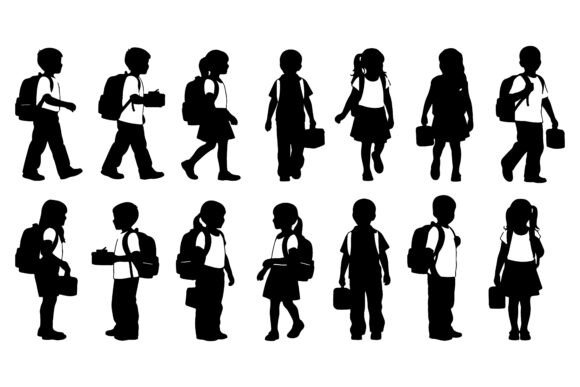
The Group of School Children Walking image stands out because it captures a moment of transition. Unlike static classroom scenes that depict learning in isolation, the walking group suggests journey, progress, and the collective experience of schooling. When this concept is rendered as a silhouette, particularly in formats like an EPS (Encapsulated PostScript) vector file or a high-quality JPG, the focus shifts from individual facial expressions to the overall shape and energy of the group.
Silhouettes offer a unique advantage by stripping away distracting details. By reducing the figures to black shapes against a white background, the viewer's attention is drawn to the posture, the carrying of backpacks, satchels, or briefcases, and the dynamic flow of the group. This abstraction allows the image to be universally applicable. It removes specific cultural markers tied to uniforms or casual wear, making the image suitable for diverse audiences ranging from elementary to secondary levels. The "isolated white background" feature common in these files ensures that designers can easily integrate the graphic into complex layouts without worrying about clashing colors or difficult cutouts.
Comparing Vector Graphics to Photorealistic Alternatives
One of the primary decisions facing a designer is choosing between a vector-based Group of School Children Walking illustration and a photographic alternative. Each format serves distinct purposes and comes with its own set of tradeoffs.
Vector Files (EPS/AI):
- Scalability: The most significant benefit of an EPS file is infinite scalability. A vector silhouette of children walking can be resized from a small business card icon to a massive billboard without any loss of quality. This makes it ideal for print media where resolution is critical.
- Customization: Vectors allow for easy manipulation of colors and layers. A designer can change the color of the silhouettes to match a brand palette or add custom text within the negative space.
- Clean Aesthetic: The graphic nature of vectors provides a clean, modern look that works well in infographics, presentations, and minimalist web designs.
Photographic Images (JPG/PNG):
- Emotional Resonance: Photographs capture real textures, lighting, and genuine emotions. Seeing the fabric of a uniform, the dirt on shoes, or the sunlight hitting a backpack creates an immediate emotional connection that illustrations sometimes struggle to achieve.
- Contextual Realism: If the goal is to depict a specific environment—such as a rainy day commute or a bustling city street—a photo provides context that a flat silhouette cannot.
- Licensing Complexity: High-quality stock photos often require stricter licensing agreements regarding model releases, especially when depicting minors, whereas generic silhouette vectors are often available under simpler royalty-free terms.
Evaluating Use Cases: When to Choose the Silhouette
Determining when a Group of School Children Walking silhouette is the right choice requires analyzing the project's goals. This asset excels in situations where clarity, versatility, and symbolic representation are prioritized over realism.
Brand Identity and Logos: For schools, tutoring centers, or educational NGOs, a silhouette is often superior for logo design. The simplified shapes ensure the mark remains legible at small sizes, such as on a favicon or embroidered patch. The concept of children walking together perfectly encapsulates themes of community and shared growth without the clutter of photorealistic detail.
Presentation Materials and Infographics: In corporate or academic presentations, consistency is key. Using a collection of vector figures allows a presenter to maintain a cohesive visual style throughout slides. A silhouette of students carrying books fits seamlessly next to charts, graphs, and icons, whereas a full-color photograph might dominate the slide and distract from the data.
Web Design and UI Elements: Modern web design favors lightweight, fast-loading assets. Vector graphics generally have smaller file sizes compared to high-resolution photographs, contributing to better site performance. Furthermore, the isolated white background of a silhouette makes it easy to place over various website backgrounds, whether it is a solid color, a gradient, or a blurred image.
Limitations and Considerations
While the Group of School Children Walking silhouette is versatile, it is not without limitations. The primary tradeoff is the lack of specific detail. If a campaign requires highlighting diversity in a nuanced way—showing specific disabilities, cultural attire, or unique interactions—a generic silhouette may feel too abstract or impersonal. In these cases, a carefully curated photograph or a highly detailed digital illustration might be more appropriate to convey empathy and specificity.
Additionally, the "flat" nature of silhouettes can sometimes feel cold or detached if not paired with warm typography or complementary imagery. Designers must ensure that the surrounding elements provide enough warmth to balance the stark contrast of black-on-white figures. It is also crucial to consider the source of the vector art. Low-quality clipart can appear dated and unprofessional, undermining the credibility of the educational institution or organization using it.
Decision Factors for Selecting Educational Imagery
When comparing options for representing students and education, several factors should guide the final selection. Professionals should evaluate the intended medium, the target audience, and the message being conveyed.
- Medium Requirements: Is the image destined for large-format printing or digital screens? If large-scale printing is required, the vector EPS format is non-negotiable for maintaining sharp edges. For digital-only use, a high-resolution JPG offers flexibility but lacks the editing power of a vector.
- Message Tone: Does the project need to feel official and structured, or warm and human? Silhouettes lean towards the former, offering a sense of order and universality. Photos lean towards the latter, emphasizing individuality and emotion.
- Integration Needs: How will the image interact with other design elements? If the design involves overlaying text or combining multiple graphics, the clean lines of a silhouette are far easier to work with than the complex edges of a photograph.
- Budget and Licensing: While many silhouette sets are available as affordable stock assets, premium photography can be significantly more expensive due to model release fees and usage restrictions. Understanding the budget constraints early can narrow down the viable options.
Practical Application Examples
Consider a scenario where a district is launching a new back-to-school safety campaign. They need imagery that represents all students regardless of age or background. A Group of School Children Walking silhouette, featuring boys and girls with backpacks and satchels, would be an excellent choice. It avoids singling out any specific demographic while clearly communicating the theme of commuting to school. The image can be printed on posters, flyers, and social media banners without modification.
Conversely, if a private school is creating a brochure to attract prospective parents, they might prefer a photograph. Parents want to see happy, engaged faces and high-quality facilities. A photo of a diverse group of teenagers walking on a sunny campus path, wearing their specific uniforms, tells a story of belonging and success that a silhouette cannot replicate. Here, the "realness" of the image is the selling point.
Conclusion: Balancing Style and Substance
The choice between a Group of School Children Walking silhouette and other visual representations ultimately depends on the specific needs of the project. The silhouette offers unmatched versatility, scalability, and symbolic clarity, making it a staple for graphic design, branding, and informational materials. Its ability to isolate the essence of childhood movement—energy, activity, and the journey of learning—makes it a timeless asset.
However, it is not a one-size-fits-all solution. Projects requiring deep emotional engagement, specific cultural representation, or hyper-realism may find that photography or detailed illustration serves them better. By weighing the strengths of vector art against the emotional depth of photography, professionals can select the right resource to effectively communicate their message. Whether utilizing an EPS file for a scalable logo or a JPG for a website banner, the key is to align the visual style with the strategic goals of the educational initiative.